
Patient resources
After Dental Implant Placement
The implant integrates with the bone over the coming months, and the first two weeks set that up. Most of what follows is about keeping pressure and disturbance off the site while the gum closes over it, and off the implant itself until it is ready to carry a tooth.
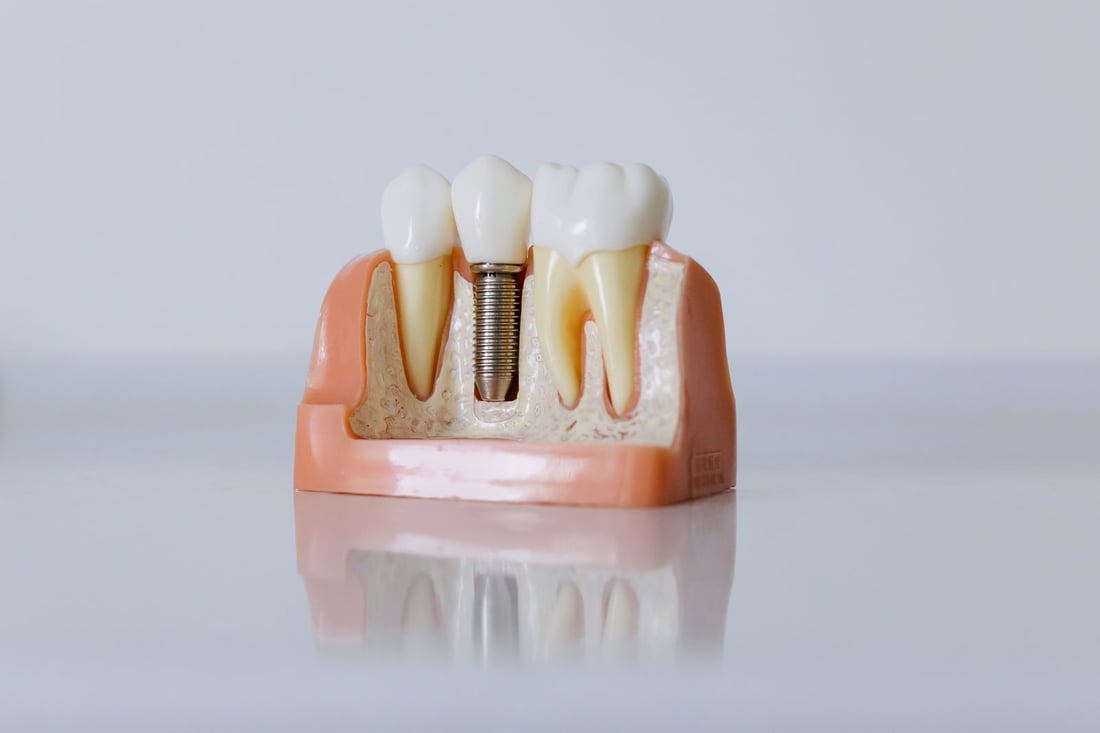
The day of surgery
Do not disturb the wound. No rinsing, spitting, or touching the site with the tongue, a finger or a toothbrush today. There may be a small metal healing cap showing through the gum over the implant. That is expected, and it stays where it is.
Gauze. If gauze was placed, bite on it with steady pressure for 30 minutes without checking. If the site is still oozing when it comes out, fold fresh gauze, dampen it, place it over the site and bite for another 30 minutes. Repeat as needed. Stop using gauze once the bleeding has stopped.
Numbness. The lips, cheek and tongue stay numb for two to four hours. Avoid biting them, and let the numbness wear off before eating.
Rest. Keep the head raised on two or three pillows for the first 24 hours, including when lying down, and physical activity to a minimum.
Pain relief. Fill any prescription on the way home and take the first dose before the local anesthetic wears off, then stay on the schedule given.
Bleeding
Some bleeding or redness in the saliva is normal for 24 hours, and saliva tinged pink can continue for a day or two. Bleeding that fills the mouth is controlled by biting on a gauze pad placed directly over the site for 30 minutes, or on a dry tea bag for the same time where gauze has not worked. If it continues after that, call the office.
Swelling and bruising
Swelling is normal and peaks at 48 to 72 hours. Apply a cold pack, ice in a sealed bag or a bag of frozen peas, wrapped in a damp towel, to the cheek over the site, 20 minutes on and 20 minutes off, for the first 24 to 48 hours. From the third day, warm, moist heat helps the swelling and the stiffness disperse. Sleep with the head raised for the first few nights.
Bruising on the cheek sometimes appears a day or two later and clears within a week to ten days. Limited mouth opening and jaw stiffness are normal for the first week or so.
Pain
Discomfort is normal and is managed with the medication prescribed or recommended at the appointment, taken on schedule. For most people that is over-the-counter ibuprofen and acetaminophen, taken as the practice directs. A prescription is given where more is needed. Avoid aspirin-containing products, which increase bleeding. Anyone taking prescription pain medication does not drive, operate machinery or drink alcohol while it is in effect. Anyone with liver or kidney disease, a stomach ulcer, or on blood thinners, or who is pregnant, confirms the medication plan with the office or their own physician.
Pain eases a little more each day from the third or fourth day. Pain that is increasing instead, or that the medication is not controlling, is a reason to call.
Antibiotics and rinses
If an antibiotic was prescribed, take it as directed and finish the course. If a medicated mouth rinse (chlorhexidine) was prescribed, start it 48 hours after surgery, after brushing in the morning and at bedtime, swishing gently for at least 30 seconds and spitting gently. Do not eat, drink or rinse immediately after it. Stop any medication that causes hives or itching and call the office.
Eating
Day of surgery: liquids and soft food, cool or lukewarm. Nothing hot for the first 24 hours. Drink plenty of fluids, from a cup rather than a straw.
The first two weeks: a relatively soft diet (soup, yogurt, smoothies with a spoon, eggs, well-cooked pasta, fish, mashed potato, cooked vegetables), chewing on the other side. Avoid hard, crunchy or sticky food (chips, pretzels, popcorn, nuts, seeds) for two weeks.
Make every effort not to chew directly over the implant until the practice says it is ready. That holds even once the gum feels healed, because the bone underneath is still integrating. Do not skip meals.
If a temporary tooth was fitted
A temporary crown or bridge fitted on the day is there to look right, not to chew on. Keep it out of heavy contact: bite elsewhere, keep hard and chewy food off it, and treat it as a front-of-mouth appearance piece until the practice says otherwise. A temporary tooth that comes loose, or anything that feels like the implant itself moving, is a same-day call.
Keeping it clean
Good hygiene is essential to healing, and the tissue around an implant stays healthy when it is looked after.
- Day of surgery: no rinsing.
- From the day after: rinse gently after meals, and at least twice a day, with warm salt water (half a teaspoon of salt in a glass of warm water), letting it fall out of the mouth rather than spitting hard. Continue until the gum has closed.
- Brushing: resume the normal routine from the day after surgery. Brushing the teeth and the healing cap is fine. Be gentle around the site, and keep the brush off the stitches until they have dissolved.
- No water flosser, electric flosser or electric toothbrush near the site until the practice clears it.
Stitches
Stitches are usually the dissolving kind and come away on their own within one to three weeks. They loosen as the swelling goes down, which is normal.
If a denture, partial or flipper is worn
Do not wear it over the site until the practice has adjusted it. It can press on the implant and the graft beneath it. Once adjusted, it is worn for appearance rather than chewing until the practice says otherwise, and never forced in if it hurts or feels tight. Call for an adjustment instead.
Activity
Avoid exertion for 72 hours: no bending, heavy lifting, strenuous activity or sports. Exercise during the first days tends to bring on throbbing or bleeding, and intake is lower than usual, so stop if lightheaded. Return to normal activity gradually after that.
Numbness
Numbness of the lip, chin or tongue beyond the first day is uncommon and usually temporary. Notify the office if it has not improved after two weeks, or if it feels unusual at any point.
The months that follow
Bone healing around the implant takes three to six months. There are routine checks during that time, the final crown or bridge follows once integration is confirmed, and nothing is rushed. Keep every scheduled follow-up.
When to call
Call 703-288-4495 for:
- Bleeding that does not slow with firm pressure
- Pain that is severe, increasing, or not controlled by the medication
- Swelling that worsens after the third day instead of improving
- Fever above 100.4°F (38°C), chills, pus or a bad taste
- A temporary tooth, healing cap or screw that feels loose, or anything that feels like the implant moving
- A graft membrane that can be felt coming loose
- Numbness that is not improving, or that feels unusual
- A reaction to any medication
Difficulty breathing or swallowing is an emergency: call 911. Anything else that cannot wait until the office opens is a matter for an emergency department.
Questions after your procedure
The practice would rather hear from you than have you wonder.