
Patient resources
After Exposure and Bonding
The surgery is small. Soreness is usually modest. What the next months depend on is the bracket and chain it leaves behind, so most of what follows is about leaving the site, and the attachment, alone.
The day of surgery
Do not disturb the wound. No rinsing, spitting, or touching the site with the tongue or a finger today. If a surgical pack or dressing was placed over the tooth, leave it alone: it keeps the tooth exposed while the gum settles. If it comes loose or falls out, that is not an emergency, but call the office for advice.
Gauze. Bite on the gauze over the site with steady pressure for 30 minutes, and replace it once for another 30 if the site is still oozing. Keep the head raised and rest until the bleeding has stopped.
Numbness. The lip, cheek and palate stay numb for two to four hours. Avoid biting them, and let the numbness wear off before eating.
Pain relief. Take the first dose before the local anesthetic wears off, then stay on the schedule given.
The attachment
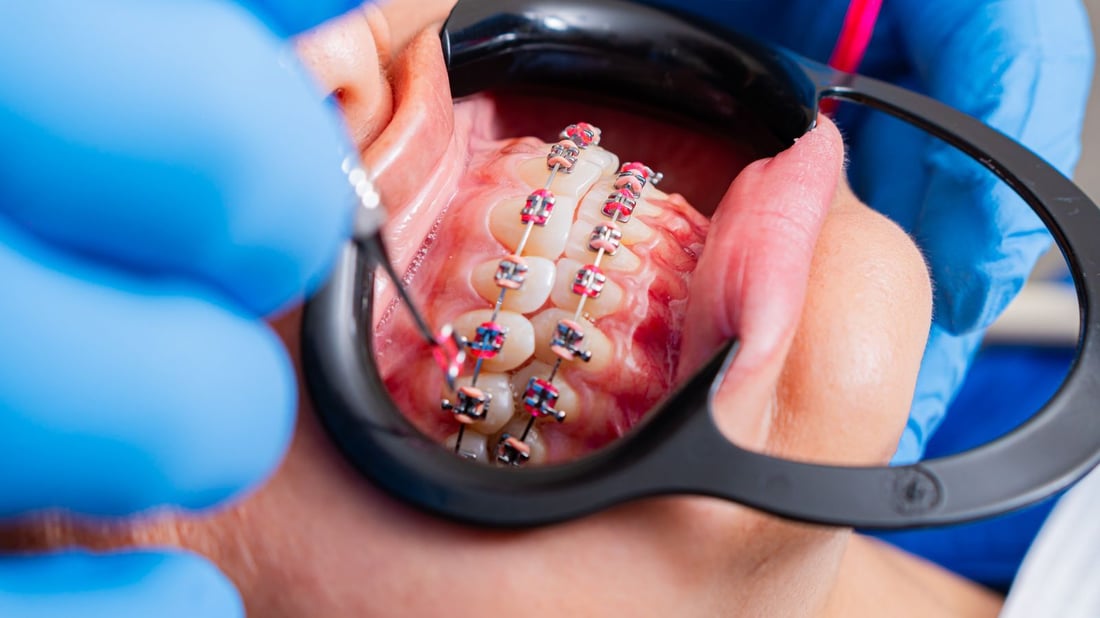
A small bracket is bonded to the uncovered tooth, with a fine gold chain leading from it that the orthodontist will use to guide the tooth into place over the coming months. The chain is usually stitched out of the way. It is delicate and easily dislodged.
- Do not pull, press or play with the chain, with fingers or tongue.
- Be careful when eating for the first few weeks. Nothing hard, sticky or chewy that could catch it.
- A little bulk under the lip or on the palate is normal while the gum settles around it.
- If the bracket comes off or the chain comes loose, keep it if you can and call the office the same day. It is replaceable, and sooner is easier.
Bleeding
Some bleeding or redness in the saliva is normal for 24 hours. Bleeding that fills the mouth is controlled by biting on a gauze pad placed directly over the site for 30 minutes. If it continues after that, call the office.
Swelling
There is usually little swelling after an exposure, less than after an extraction. Where there is, apply a cold pack, ice in a sealed bag or a bag of frozen peas, wrapped in a damp towel, to the cheek or lip over the site 20 minutes on and 20 minutes off for the first 24 to 36 hours. Swelling usually begins to settle within 48 hours.
Pain
Soreness is expected for a few days and is managed with over-the-counter ibuprofen and acetaminophen, taken as the practice directs, with a prescription where more is needed. Taking medication with food rather than on an empty stomach reduces nausea. Pain eases a little more each day from the third or fourth day. Pain that is increasing instead is a reason to call.
An antibiotic is not usually needed. If one was prescribed, take it as directed and finish the course.
Eating
Day of surgery: liquids and soft food, cool or lukewarm. Nothing hot for the first 24 hours, and no straws. Drink plenty of fluids.
After that: soft food that a fork can mash (soup, yogurt, eggs, pasta, mashed vegetables) for a few days, returning to a normal diet as comfort allows, with care around the site and the chain. Cold things like ice cream are soothing. Avoid anything hard, sticky or chewy for the first few weeks.
Keeping it clean
A clean wound heals better and faster.
- Day of surgery: no rinsing. Brush the rest of the mouth gently.
- From the day after: clean the mouth thoroughly after each meal. Brush as normally as comfort allows, gently around the site and the bracket, with a soft brush. Rinse with warm salt water (half a teaspoon of salt in a glass of warm water) after meals, letting it fall out of the mouth rather than spitting hard, and continue until the site has healed.
- Braces, if already fitted, are cleaned as the orthodontist has shown.
Stitches
Stitches, where used to hold the gum back or to keep the chain out of the way, are the dissolving kind and come away on their own in about two weeks.
Activity
Keep physical activity to a minimum for 24 hours: nothing that raises the heart rate, no heavy lifting or exercise. Exercise in the first days tends to bring on throbbing or bleeding, and stopping is the right response. No alcohol or smoking for at least three days.
The orthodontist
The orthodontist sees you within a few weeks of the exposure to check the site and begin applying traction to the chain. Keep that appointment: the tooth moves on the orthodontist's schedule, and the exposure only opens the door. Further orthodontic appointments follow as part of the ongoing treatment.
When to call
Call 703-288-4495 for:
- The bracket coming off, or the chain coming loose
- A surgical pack or dressing that has come out
- Bleeding that does not stop with pressure
- Pain that increases after the third or fourth day, or severe pain
- Swelling that continues to worsen after two or three days
- Fever above 100.4°F (38°C)
- A reaction to any medication
- Anything that seems unusual
Anything that cannot wait until the office opens is a matter for an emergency department.
Questions after your procedure
The practice would rather hear from you than have you wonder.